
Engagements
Three acts. Every engagement.
Most clients come to us with a problem, not a brief. Every engagement maps to one of three acts — wherever you are in the journey, there is a structured starting point. You do not need to start at Act 1.
Act 1
Understand your operation
1
Act 1
Map what needs to be built
2
Act 1
Agree on the plan
3
Act 2
Build and set up on site
4
Act 2
Make sure it works
5
Act 2
Train your team
6
Act 3
Ongoing support
7
Phases 1–3
Understand
Before we build anything, we need to understand how your operation actually works. Not the brief — the reality. Act 1 is about getting that clarity, mapping the risk, and agreeing on the right path before any money is spent on a build.
Discovery Sprint
If you are not sure whether your problem needs a technology solution — or you know it does but cannot work out where to start — begin here.
A Discovery Sprint is a structured investigation into your operation. We map the problem, the constraints, and the risks. We tell you honestly what we found — including whether technology is the right answer at all.
- A clear picture of what you are actually dealing with — not just what you think you are dealing with
- Ownership gaps and dependency risks identified before they become expensive
- A concrete recommendation on what to do next — including whether to build at all
- A scoped proposal for Act 2, if we recommend proceeding
Unknowns collapsing into clarity
Phases 4–6
Build
Act 2 is where we build. Hardware, software, automation — or all three. The scope comes from what we learned in Act 1. We build for the environment it will actually operate in, and we hand it over in a way your team can genuinely own.
Before you commit to the full build
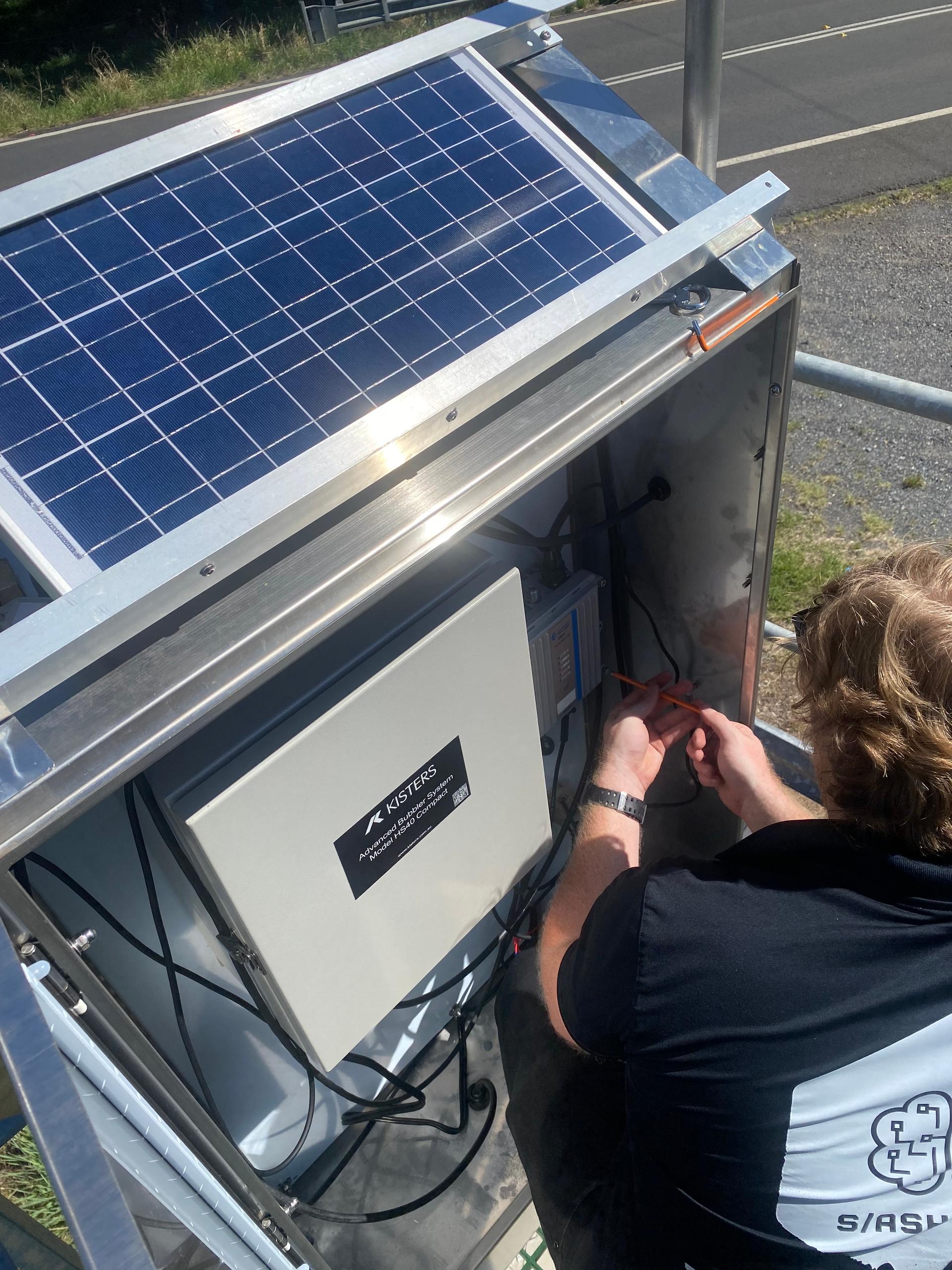
Field Prototype
Before committing to a Production Platform, prove the approach works in the conditions it will actually operate in. Not a lab demo — a working version in your real environment, tested against real constraints.
- Tested in your actual environment — conditions and all
- A clear go / no-go decision before full investment
- Early identification of the dependencies nobody thinks about until they break
The full build
Production Platform
The complete system — designed, built, installed, validated, and handed over. Not just something that works at launch. Something your team can run, change, and recover without calling us.
- A system installed and validated in your actual environment
- Full integration with what you already use
- Documentation written for the people who maintain it — not the people who built it
- Training until your team can operate it independently
- A signed handover — not just a delivery
Devices
Signals and control
Field
Constraints and context
Ops layer
Policy and lifecycle
People
Decisions and response
Phase 7
Own
Act 3 is where most firms disappear. We stay. Operational decay does not stop at handover — systems drift, requirements change, people leave. Act 3 is the commitment to keep the system running and genuinely owned as the operation around it changes.
Operations Retainer
For organisations running systems that need to keep working — ongoing support with clear ownership that does not evaporate after handover.
This is not a helpdesk. We monitor proactively, flag issues before they become visible problems, and keep the system evolving with your operation instead of quietly degrading away from it.
- A named point of contact at Slash Tech — not a ticketing system
- Proactive monitoring — we tell you before something breaks, not after
- Monthly reporting on system health and work completed
- Scheduled maintenance — planned, not reactive
- Ongoing evolution as your operation grows
Continuity over time
Stabilize and document operational behavior
Reduce drift and refine rollout policy
Evolve safely without losing context
Who this is for.
A good fit if you
- Have a system that needs to run reliably in the field — software, hardware, or both
- Have moved past the prototype stage and need something real
- Are responsible for operations and need things to keep working
- Are building something that needs to last more than twelve months
Probably not the right fit if you
- You need something built and handed over with no intention of maintaining it
- Your primary criteria is lowest cost and fastest delivery above everything else
- There is no one in your organisation who will be responsible for the system after we leave
Tell us what's decaying in your operation.
You do not need a polished brief. Tell us what is going wrong — or what you want to be better. We will tell you which act makes sense to start from and what that looks like in practice.